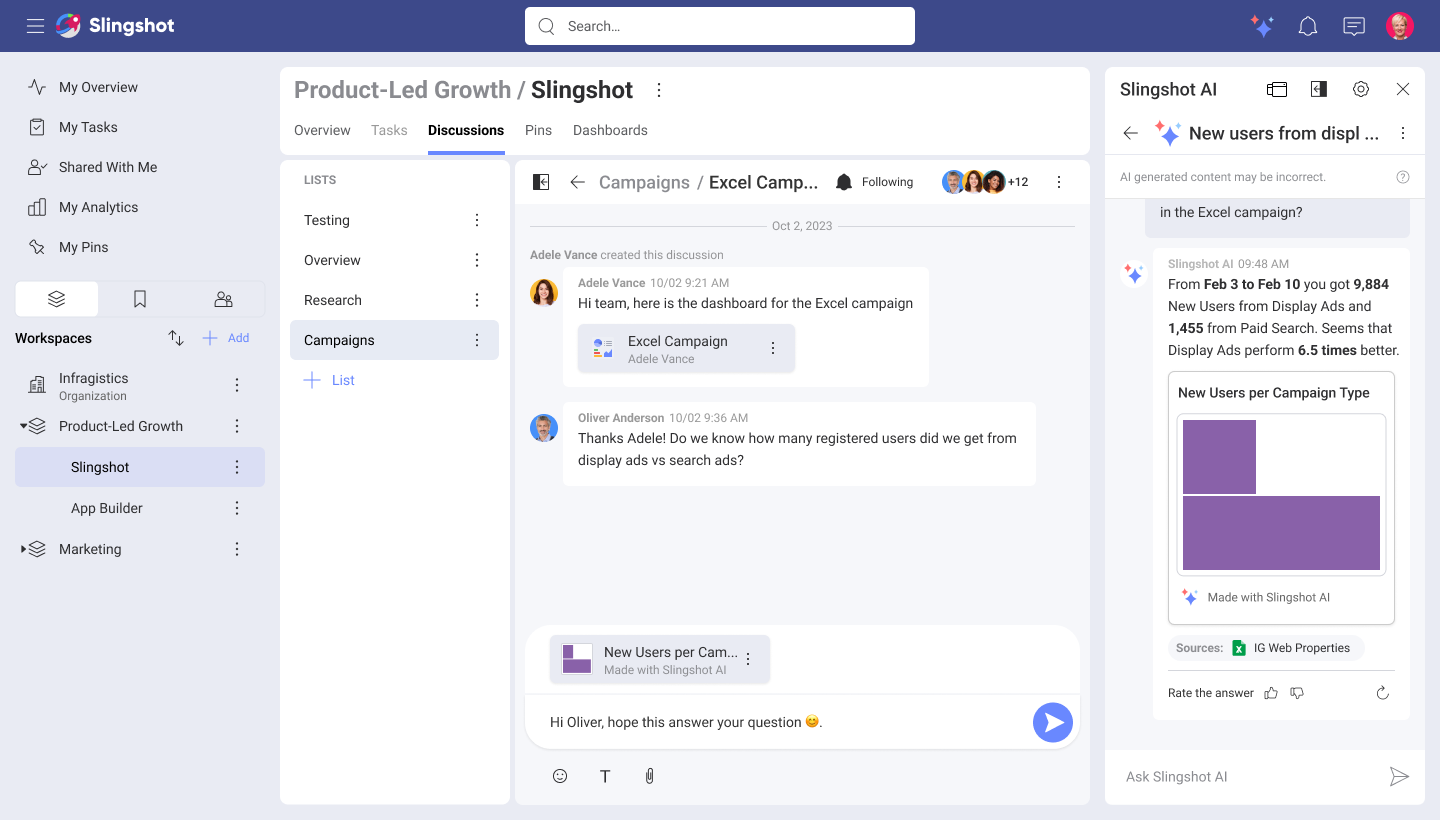
Research & experience design for AI conversational analytics
Role: UX Designer
Team: UX Director, UX Designer (for dashboards), CEO, COO, 4 developers.
Overview of product
Slingshot is a SaaS platform for project management, goal tracking, and data driven decision making.
Business goal
Organizations collect large amounts of data, but accessing meaningful insights often requires navigating complex dashboards or relying on analysts. The goal of this project was to make analytics more accessible through a conversational experience, enabling users to ask questions in natural language, uncover insights faster, and discover patterns they might not have known to look for.
Research
Together with my UX Director and Sr. UX Designer colleague, interviewed 9 external professionals about their usage of AI at work. 30 minutes focus groups with:
- 4 data analysts
- 5 non-data analysts (Product Manager, IT Manager, VP – Sr. Learning & Development, Sales, Head of Marketing)
 Goal
Goal
Understand people’s mental models, trust, and social comfort with AI in a workplace context before designing the experience.
Screenshot of one of the sessions.
Key insights
- The most popular AI tool used at work is ChatGPT
- Some participants said more than half of their work is being done with the help of AI
- AI is referred to as a tool, not as a colleague/assistant
- None of the participants want to be seen using AI by senior management or any other person that have a say on their job security
- They are concerned about:
- Trust, privacy and security: how accurate the answer is, and can I trust you with my data?
- Transparency: for data analysts: what is the AI doing to get to the result?
- Bias: what data was used to train the model?
Suggested next steps
- All outputs from AI should have the source/reference to build users’ trust
- More exploration needs to be done on how to show the logic behind the visualizations created by AI
- Data analysts are not using their customer data with AI and are not letting AI do the analysis part. When talking about the AI vision and building marketing messaging, we need to be aware of this and better define who is the user persona who could benefit from this feature. If this is intended for non-data analysts, they need a data analyst to review the results
- Participants see AI as a tool that does not make decisions for them. If entering discussions in the future about what can be automated, this subject needs more research about what is best suitable
- There is a huge concern about trust, privacy and security. Slingshot needs to explain this in the best way possible and not only rely on a small disclaimer at the sign-up page
Brainstorming
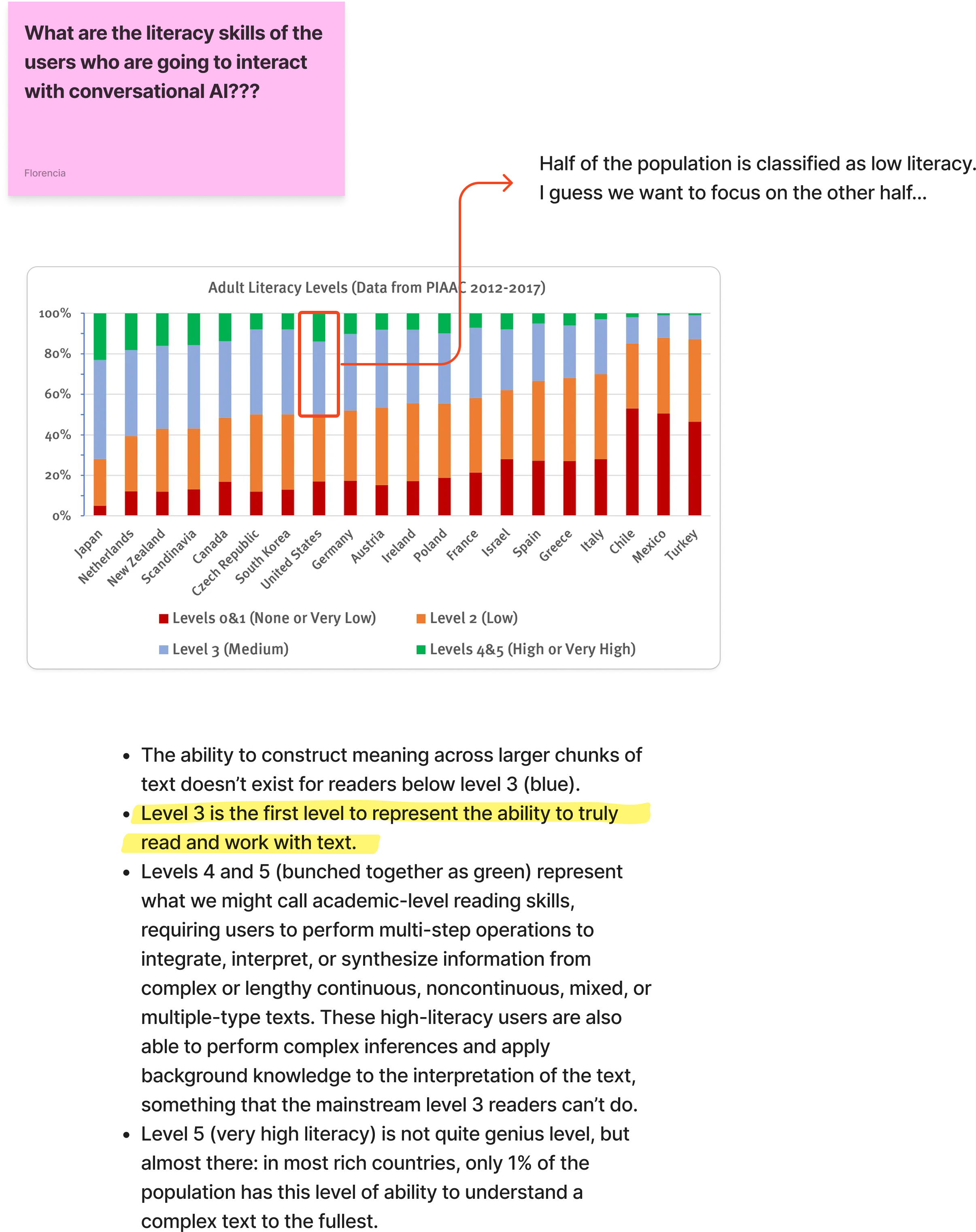
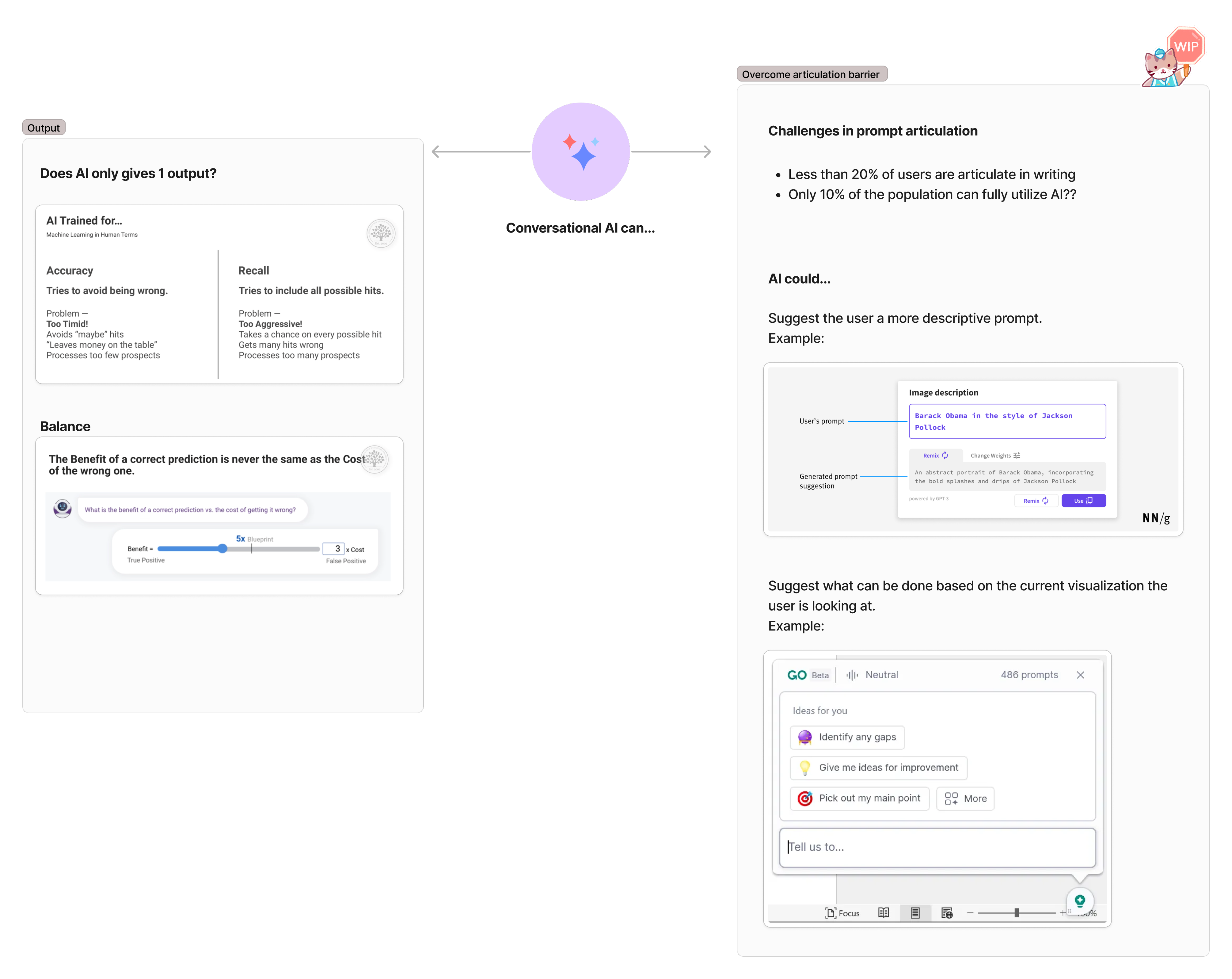
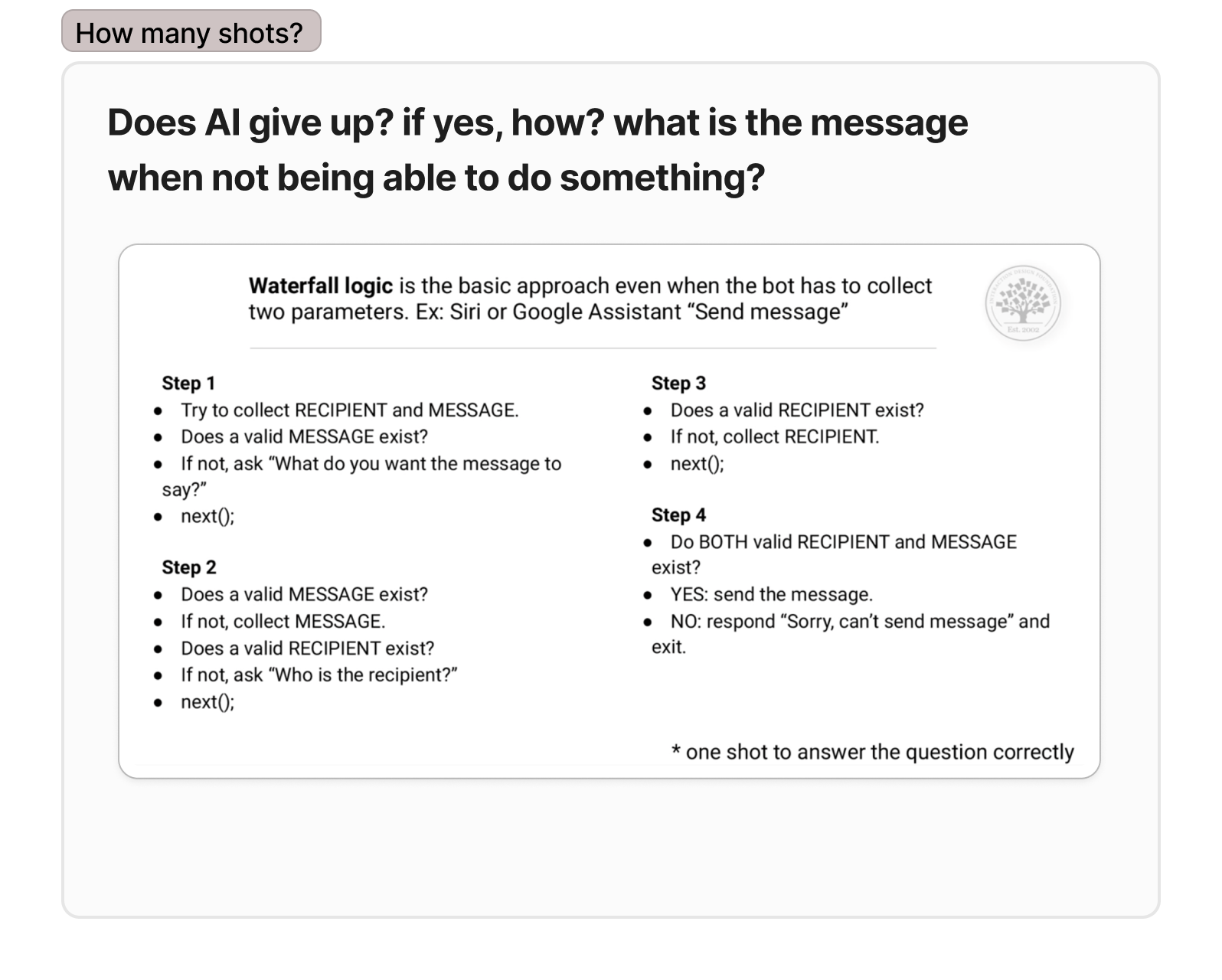
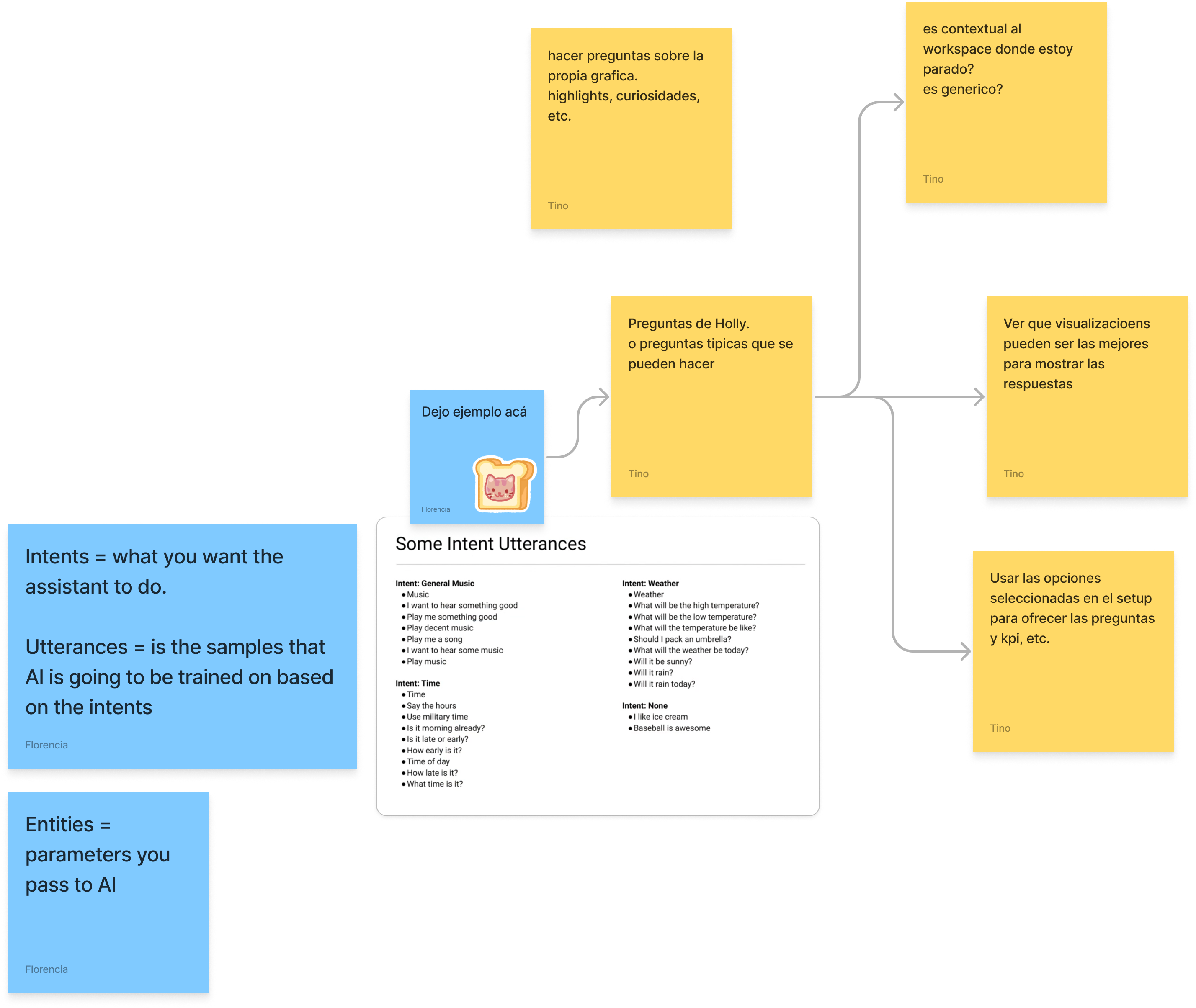
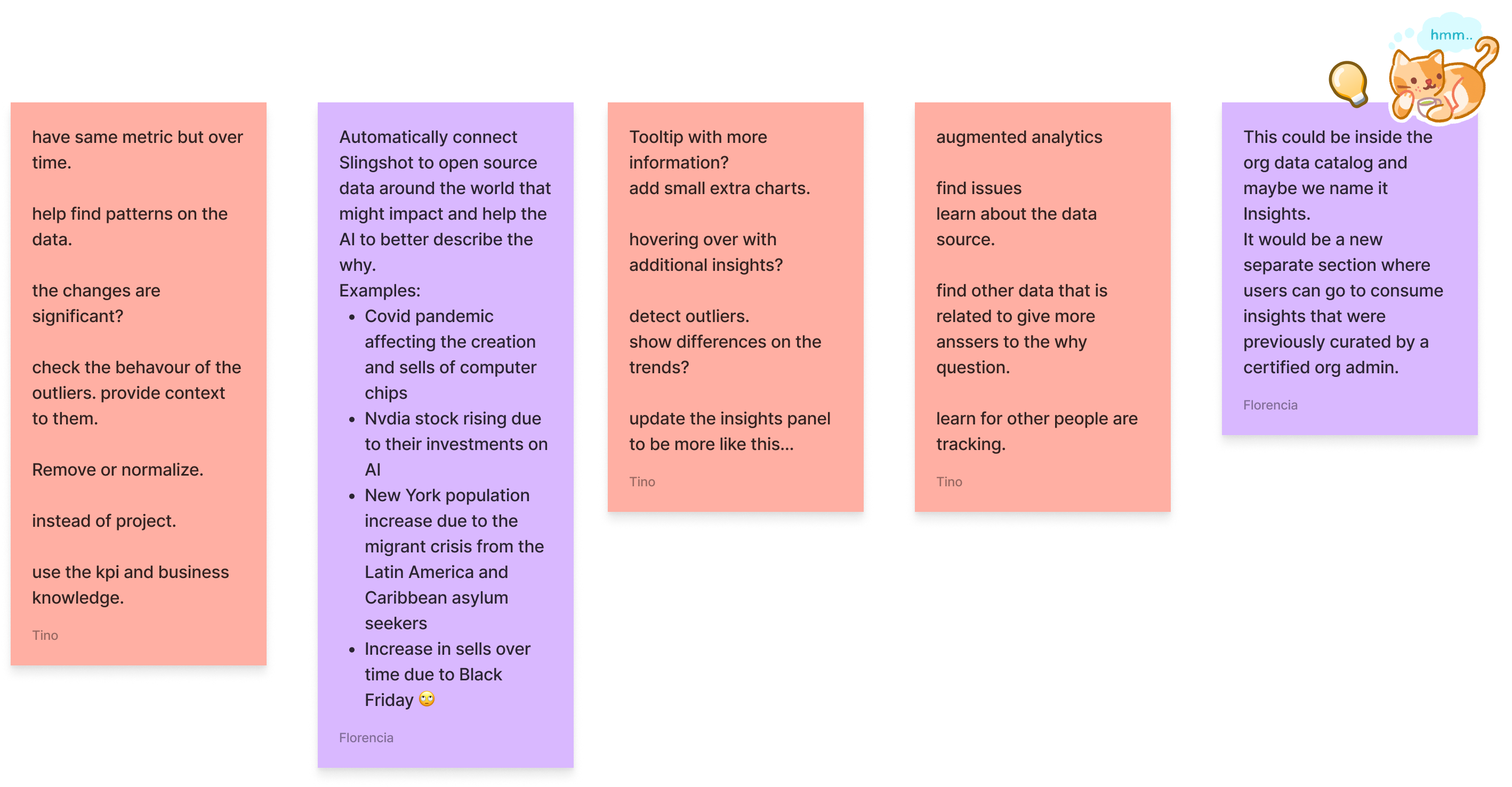
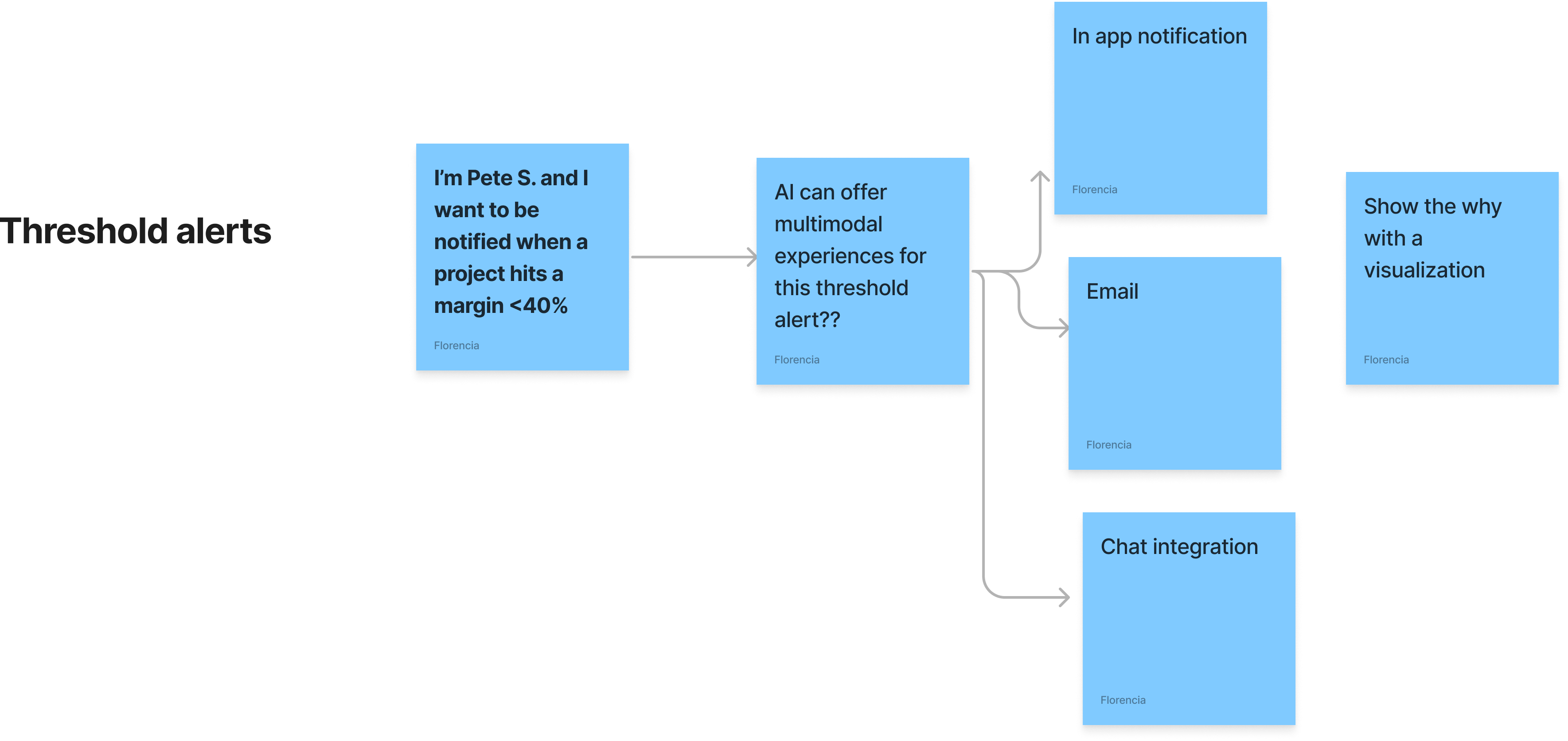
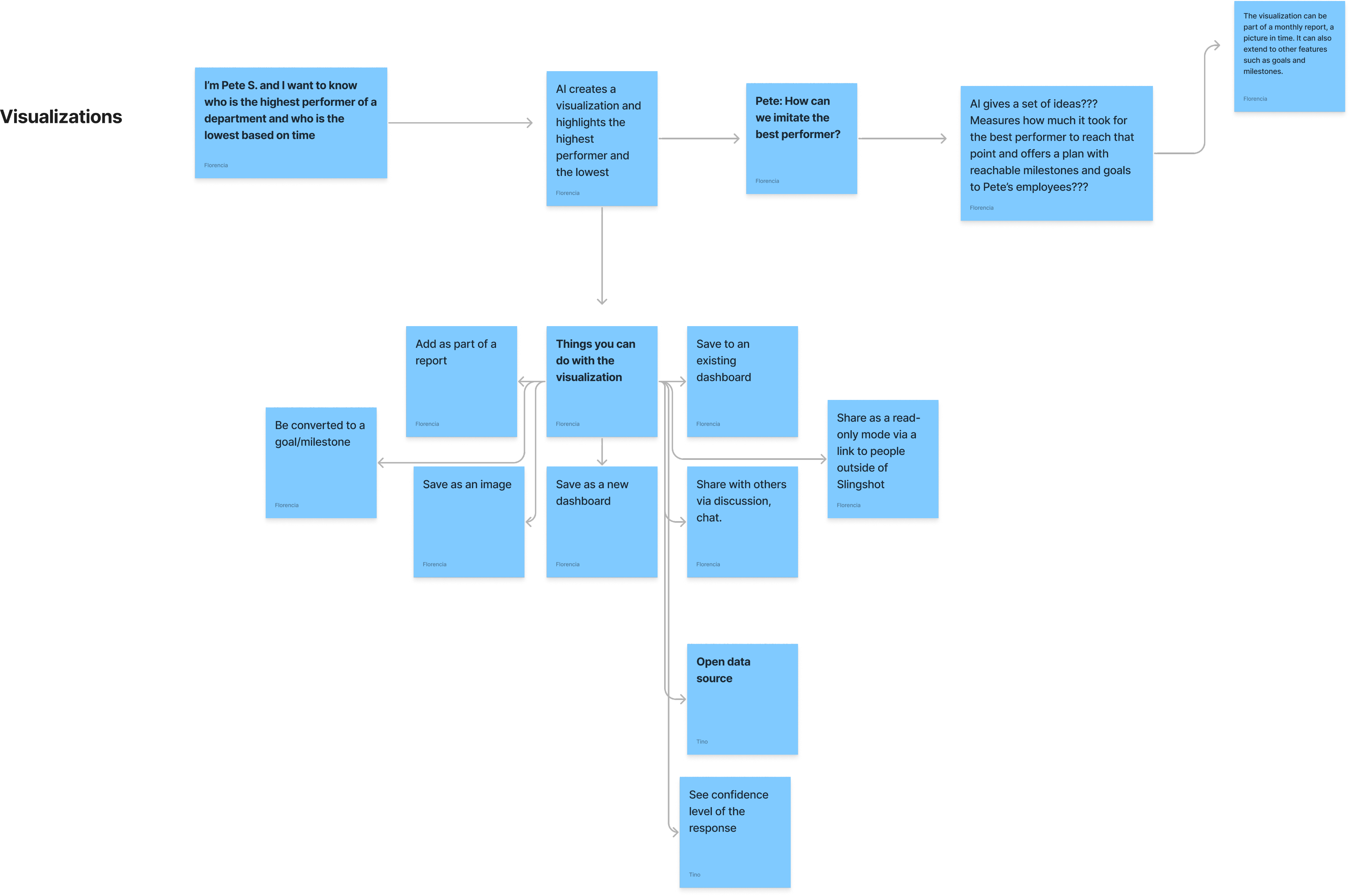
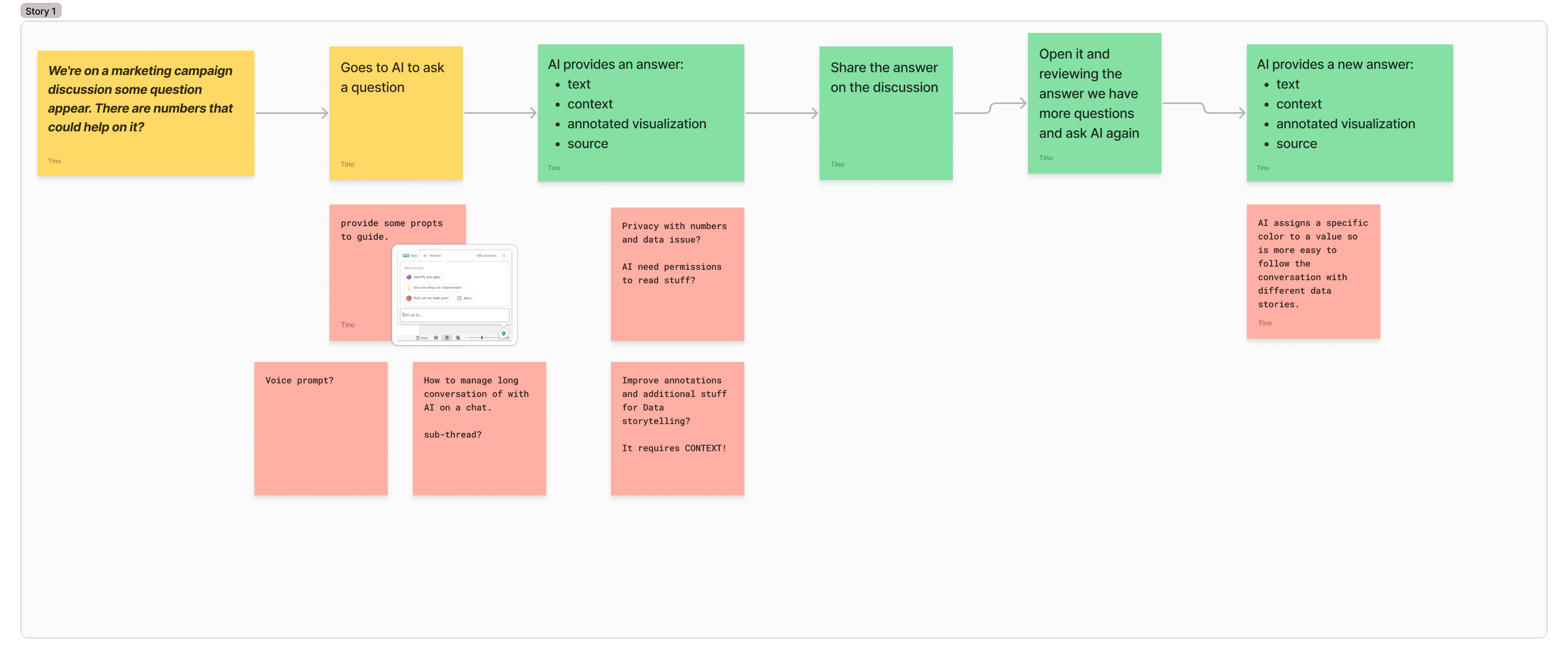
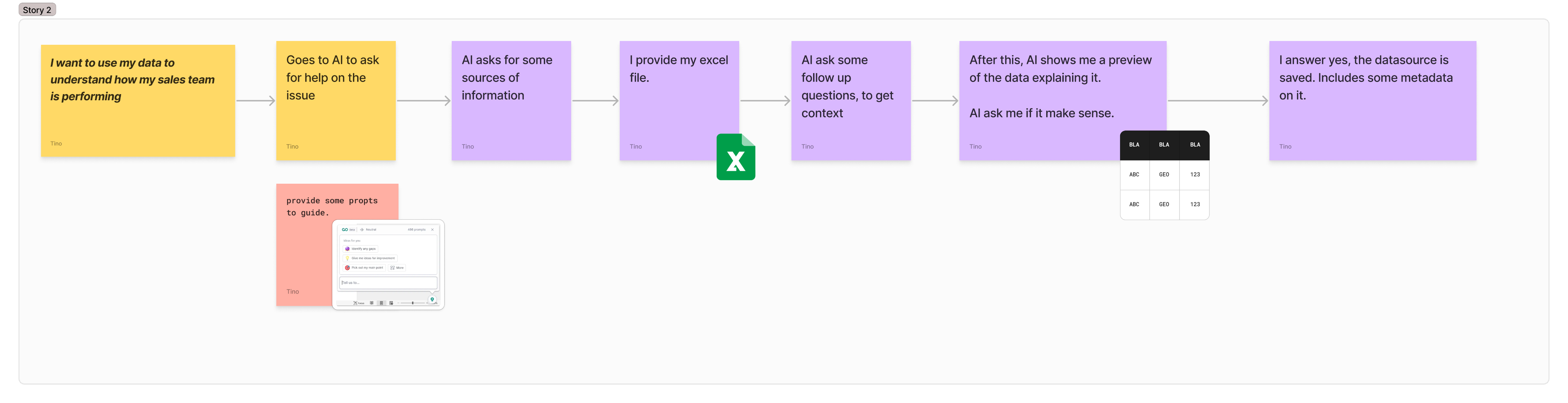
Stories
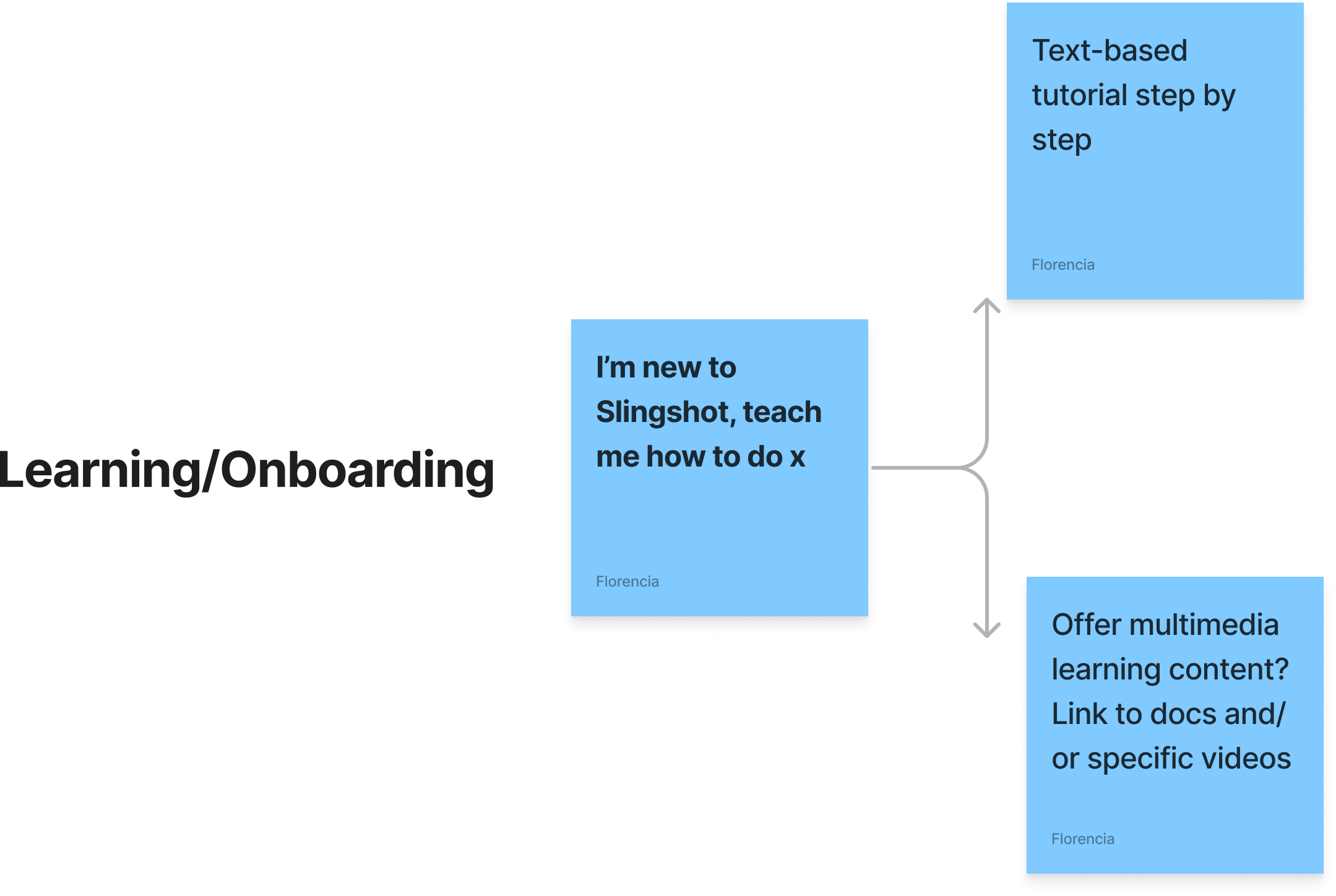
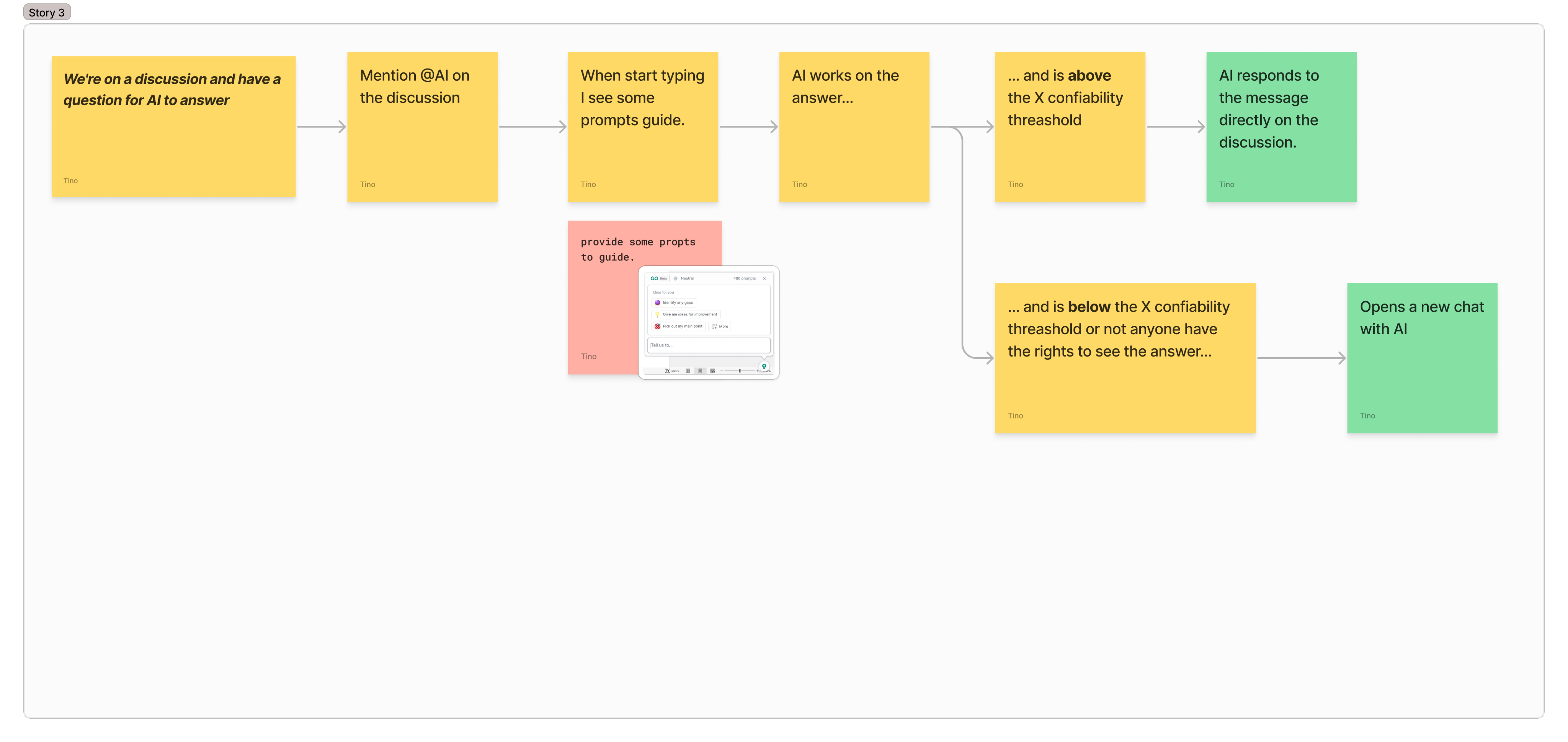
Stakeholder questions
Some of the questions that were used to train AI:
How many leads converted to users?
How many users were active 7 days after signing up?
How many registered users did we get from Marketing campaign X?
How much did we spend on Marketing campaign X in the last quarter?
Sales by product, region, new, renew, against budget and Yr/Yr that would show % and dollar amount
ARR – annual revenue recurring – renewal $$
Net ARR – annual revenue recurring (renewal) + new sales
Sales by salesperson for new and renew and distant quota
Explorations
Many explorations were made, if you would like to look at them in detail is available upon request.
Final flow
Data source details and visualizations made by Sr. UX Designer Martín Loskin.